XING HUANG
News Details
Industrial Internet: The "Apple" Dream of Manufacturing Giants
On July 7th, General Electric (GE) and China Telecom Group Corporation partnered, integrating GE's Predix industrial internet platform (akin to an operating system for industrial equipment) with China Telecom's comprehensive information services. This marked the entry of the American industrial internet into China's cloud storage, telemedicine applications, smart manufacturing, and cloud computing sectors.
A few days later, the Industrial Internet China Association was established in New York. This represented a significant breakthrough in international cooperation between the Chinese and American industrial and information and communication technology sectors, following the establishment of a dialogue on Industry 4.0 between China and Germany.
Reportedly, GE has undertaken 12 pilot industrial internet projects in China and is implementing over 40 big data analysis applications. The industrial internet, considered a hallmark of the third industrial revolution, is substantially participating in and influencing the progress of the "Internet Plus" action plan in China's industrial sector.
Before the large-scale introduction of the industrial internet into China's industrial sector, it is necessary to thoroughly examine its origins, purpose, objectives, and potential drawbacks.
Industrial Internet
Re-inventing American Manufacturing
Following the 2008 financial crisis, the US government's primary reflection was recognizing the importance of the real economy in the national economy and the role of industry as the most critical component of national competitiveness. A series of national plans were subsequently introduced, including the "Framework for Revitalizing American Manufacturing," the "Advanced Manufacturing Partnership," and the "National Strategic Plan for Advanced Manufacturing," aiming to achieve the national strategy of "reindustrialization".
In 2012, GE, a leader in American manufacturing, pioneered the concept of the "industrial internet." Leveraging the interconnectivity of machines and equipment and analytical software, it shifted from a model primarily based on single intelligent devices. By combining high-performance equipment, low-cost sensors, the internet, and big data collection and analysis technologies, it aimed to significantly enhance the efficiency of existing industries and create new ones.
This concept has long-standing roots. As early as 2005, GE's aircraft engine division, reorganized as GE Aviation, began transforming its business model. Initially focused solely on manufacturing aircraft engines, it now installs numerous sensors on aircraft to collect real-time data. Using big data analysis, it provides airlines with a comprehensive solution encompassing maintenance management, capacity assurance, operational optimization, and financial planning, along with safety controls and flight prediction services, effectively transitioning GE into a software company.
Taking ITA Airways as an example, GE installed hundreds of sensors on each aircraft, collecting real-time data on engine operation, temperature, fuel consumption, and more. Using GE's software for large-scale analysis, the optimal control methods are precisely determined. This alone saved ITA Airways $15 million in fuel costs annually across its 145 aircraft. Moreover, this data enables predictive maintenance, preventing potential engine failures, avoiding flight delays, cost increases, and potential safety accidents.
Through this deep integration of IT technology and equipment, GE transitioned from an equipment manufacturer to a smart service provider. Its business model shifted from selling single equipment to providing integrated intelligent systems encompassing intelligent devices, intelligent analysis, and intelligent decision-making.
Experts generally believe that the value of the industrial internet will be reflected in three main aspects: firstly, improved equipment utilization efficiency, reducing energy waste and contributing to GDP growth; secondly, enhanced system maintenance efficiency, reducing downtime, essentially increasing productivity; and thirdly, operational optimization and simplification, freeing up valuable human resources.
GE predicts that if the industrial internet increases productivity by 1% to 1.5% annually, it could raise average American incomes by 25% to 40% over the next 20 years. If other regions achieve half of that productivity growth, the industrial internet could add $10 to $15 trillion to global GDP during that time.
To this end, GE established an industrial internet R&D center in Silicon Valley in 2011, with a current team of over a thousand. In 2013, GE announced a $1.5 billion investment in industrial internet development over three years. In April of this year, GE announced the divestment of most of its $363 billion financial operations over the next two years, aiming for 90% of its profits to come from high-return industrial businesses by 2018 (compared to 58% last year).
This demonstrates that the value of the industrial internet not only lies in driving the transformation of primary manufacturers into smart manufacturing systems and service providers, but also in the potential to create a new high-end real economy sector with profit margins exceeding those of the financial industry.
Open Platform
Building a Smart Manufacturing "Apple" System
As the inventor of the internet, the industrial internet is inherently open. Compared to the internet, the industrial internet requires not only openness in telecommunication networks, data storage, and transmission (ICT) but also openness and integration between manufacturing and IT technologies.
This is a research and development effort spanning "two ITs." In March 2014, GE partnered with IBM, Cisco, Intel, and AT&T to form the Industrial Internet Consortium (IIC). The IIC employs an open membership model, aiming to enable data sharing among various manufacturers' equipment. This involves not only internet network protocols but also aspects such as data storage capacity in IT systems and various parameters of interconnected and non-interconnected devices. The goal is to break down technical barriers by establishing common standards, leveraging the internet to energize traditional industrial processes, and better facilitate the integration of the physical and digital worlds. The aim is to accelerate the development, acquisition, and widespread adoption of interconnected machines and devices, promote intelligent analysis, and provide assistance to workers. Currently, the IIC has 167 members.
This is an open system in the sense of an ecosystem, not a supply chain. In October 2014, GE announced that its Predix industrial internet platform (equivalent to an operating system for industrial equipment) would be open to all companies worldwide, introducing the internet's platform and application developer collaboration model into industry to facilitate the rapid large-scale development of customized industry applications.
This is a standardized collaborative organization targeting the global market. Currently, Chinese companies and organizations such as China Telecom, Haier, Huawei, the China Academy of Information and Communications Technology, and the Shenyang Institute of Automation, Chinese Academy of Sciences, have joined the IIC, sharing the latest technologies and resources with the global industrial internet community.
We believe that the goal of GE and other companies in establishing the Industrial Internet Consortium is to leverage America's advantages in information technology, achieve deep integration with manufacturing, take the lead in technological and industrial standards, and ultimately dominate global competition. Currently, the industrial internet is not a US national strategy, contrasting with Germany's nationwide push for its Industry 4.0 strategy. However, since many US companies within the consortium bear responsibility for "reindustrializing" America, and the core technology includes CPS (Cyber-Physical Systems), many scholars study the industrial internet as an industrial strategy comparable to Industry 4.0.
Cooperation with China Telecom can be seen as the first step of the industrial internet extending an olive branch to Chinese businesses. However, let's pause. What can China gain by participating in this new industrial process aimed at revitalizing American manufacturing?
Let's turn our attention back to the first ecosystem of intelligent manufacturing—the smartphone platform. Nokia, which held the top spot in global market share for 15 consecutive years during the feature phone era and whose R&D investment was once five times that of Apple, was defeated in the first battle of the smartphone ecosystem and ultimately fell in 2013, changing hands. This is a poignant story of the first manufacturing giant unable to adapt to the intelligent age. In this story, China was clearly an observer, learner, and beneficiary. Soon after Apple, a new platform with a more open spirit emerged—Android. Through cooperation with Apple, a large number of small and medium-sized Chinese developers received billions of yuan in application revenue sharing, cultivating a large number of software and hardware development teams for the arrival of today's "Internet+" era. And with the help of cooperation with Android, coupled with the determination of Chinese mobile phone manufacturers, manufacturers such as Huawei, ZTE, Xiaomi, and Coolpad truly entered the first echelon of global smartphone shipments.
The field of intelligent manufacturing is likely to reproduce a competitive landscape similar to that of smartphones. Germany's Industry 4.0 and the US Industrial Internet will inevitably support the two most important global platforms for intelligent manufacturing in the future. The author calls on China's industrial and information and communication industries to attach great importance to the historical opportunities presented herein, to work together, and to join hands to integrate global innovation resources and accelerate the intelligent transformation of China's industrial economy. Comparatively speaking, the China-Germany Industry 4.0 dialogue process, being government-led, has been rather slow, and has not yet reached the stage where heavyweight companies join each other's industrial cooperation organizations and jointly promote the coordination of ideas and the definition of standard systems. The Industrial Internet, however, positioned for inter-enterprise, market-based open cooperation, has already "arrived late but achieved first place" in its China journey.
* * *
Through our investigation of GE's transformation to intelligent manufacturing using the Industrial Internet, we have found that world-class manufacturing giants have moved from the intelligence of individual equipment to system intelligence, and from simply leveraging automation and informationization to drive intelligence to the deep integration of ICT and equipment driving intelligence, thus forming a series of new industrial intelligent services such as equipment networking, data collection, big data analysis, and intelligent decision-making. Although GE advocates and has established the Industrial Internet Consortium, and has taken the lead in opening up the Predix platform, a major manufacturer with a relatively single manufacturing model (mainly concentrated in the aviation, energy, and medical fields) may not necessarily be able to develop into a controller of a unified industrial application platform like Apple. The dispersed nature of various industrial sub-sectors and the complexity of manufacturing technology will make the platform game and great power game of intelligent manufacturing even more unpredictable.
When American manufacturing giants bravely abandoned their lucrative financial departments and resolutely threw themselves into the torrent of intelligent manufacturing, intelligent transformation is undoubtedly a new wave of industrial transformation that will change the future landscape. At the same time, however, we see that Chinese listed companies use numerous new concepts to raise huge sums of money, the vast majority of which flow into real estate, finance, and especially the stock market. The contrast between the two is worth our vigilance! (Hu Hu, Zhu Duo Xian)
Related News
Causes and solutions for air holes appearing in die-cast parts
Zinc die casting is a casting process that rapidly fills a mold cavity with molten zinc under high pressure. The time it takes for the molten zinc to fill the die casting mold cavity is extremely short, generally a few hundredths or thousandths of a second. The pores formed during the die casting process have smooth surfaces...
What are some common surface defects in die castings?
Cold shut, also known as cold joint or cold weld, refers to the phenomenon where metal streams with lower temperatures meet and form a gap without fusion. This gap appears as an irregular line, and it can be either penetrating or non-penetrating. Under external force, it tends to expand.
Contact Information
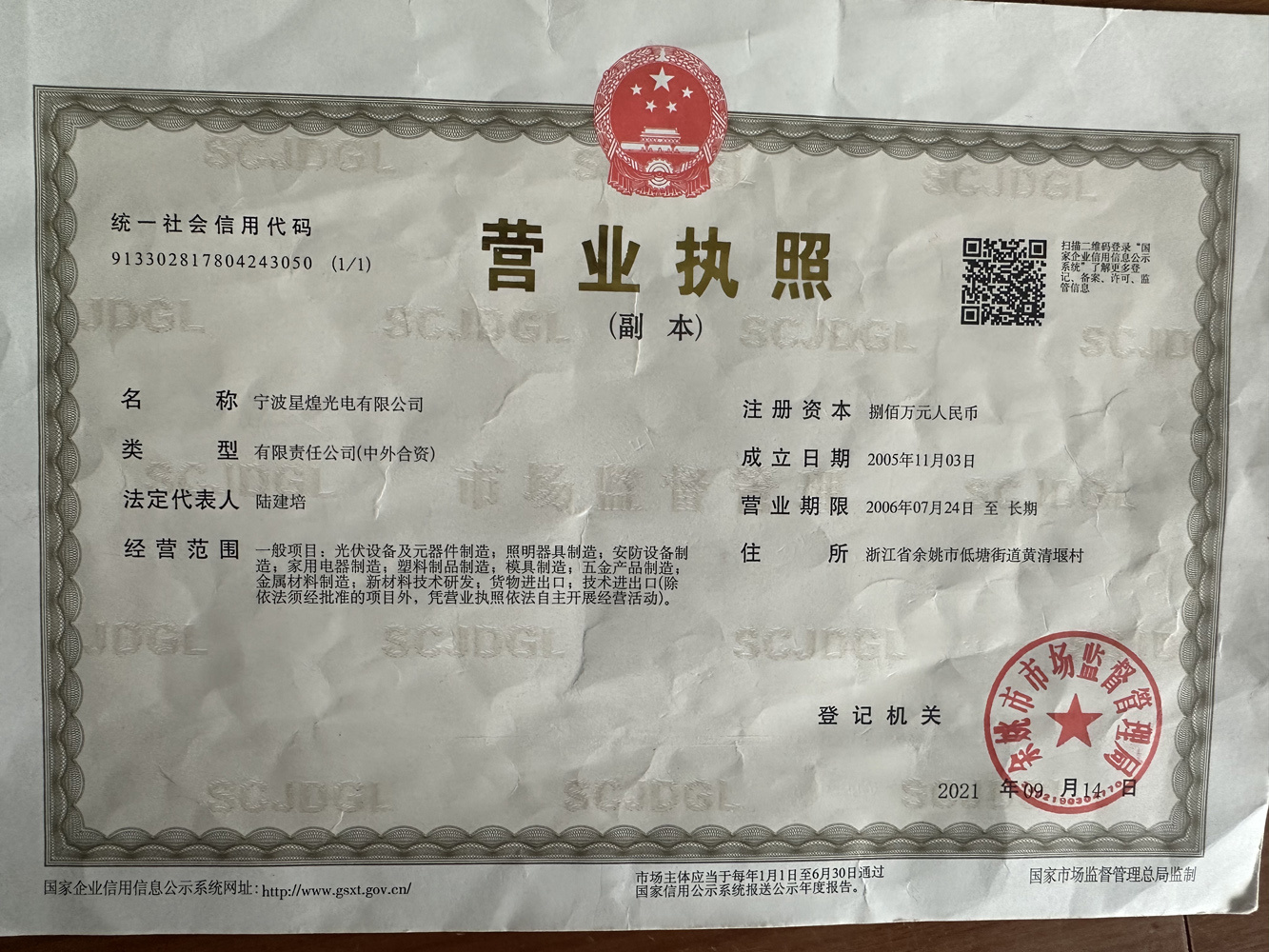
Ningbo Xinghuang Photoelectricity Co., Ltd.
Address: Huang Qingyan Village, Ditang Street, Yuyao City, Zhejiang Province
Telephone:86-574-62250222
Mobile:86-13505847262
Email:cyf@zjxhgd.com


Copyright ©Ningbo Xinghuang Photoelectricity Co., Ltd. All rights reserved Powered by www.300.cn SEO Business License